Food logging habits
How to Log Food Consistently: A Simple Routine for Real Life
A useful food diary is one you can keep and learn from. Start small, read the streak and consistency calendar honestly, and review patterns instead of judging one day.
What is a simple food-logging routine?
Start with one meal you usually remember. Log it soon after eating, check the food and portion, and save. If that feels easy, add another meal or snack. The goal is a record you can use, not a perfect score every day.
The National Institute of Diabetes and Digestive and Kidney Diseases (opens in a new tab) suggests a food and beverage diary to notice eating patterns. It does not require a particular app or an unbroken streak. In Food Focus, choose the input that fits the meal: photo, barcode, voice, or text. A useful log includes what you ate, not just the easiest meals to remember.
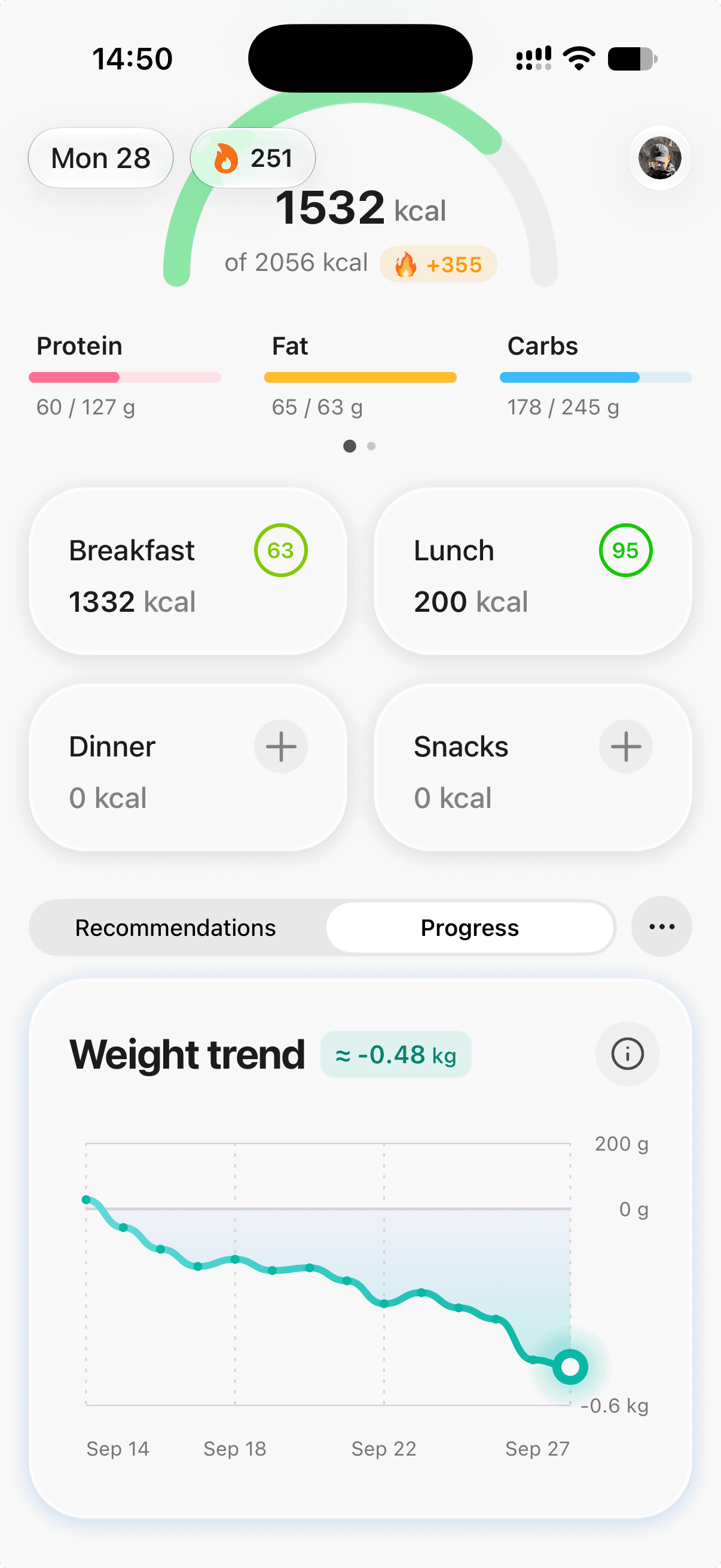
This example shows meals, daily totals, and an estimated weight trend in one place. The displayed numbers belong to one example log; they are not targets or expected results for another person. The weight trend is an app estimate, not a record of scale measurements.
What does the logging streak count?
Food Focus counts consecutive calendar days with at least one saved meal. If you have not logged today yet, yesterday's streak can still show until the day ends. A streak is a reminder of a habit, not a grade for your food choices or proof of a health result.
If you miss a day, start with the next meal. You do not need to invent a log to repair the number. A shorter honest record gives you better information than a longer streak built from guesses.
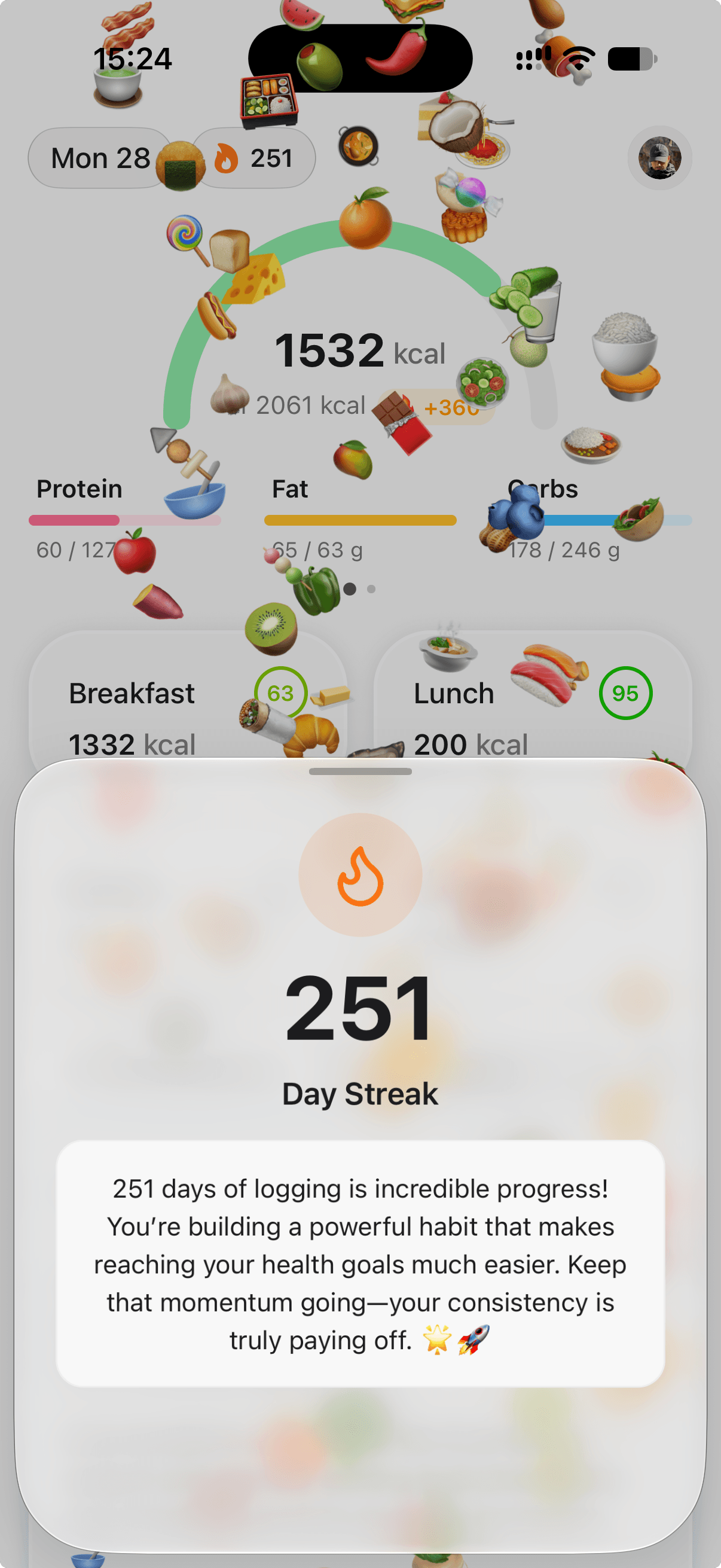
The 251-day card is an example of sustained logging. It shows how the app acknowledges repetition; it does not promise the same streak or a health outcome.
How do you read the consistency calendar?
Each square is one day. In the current Food Focus chart, a logged day is green when its estimated calories are at or below that day's target, lighter green when they are above target by up to 10%, and pale red when they are more than 10% above. A faint square means no meal was logged. The colors compare logged calories with an estimated target; they do not describe food quality or whether you met every nutrient need.
The Top foods list below the calendar ranks ingredients by their total logged calories in the selected period. It can help you spot frequently contributing foods to review. A high place on that list is not a judgment that a food is good or bad.
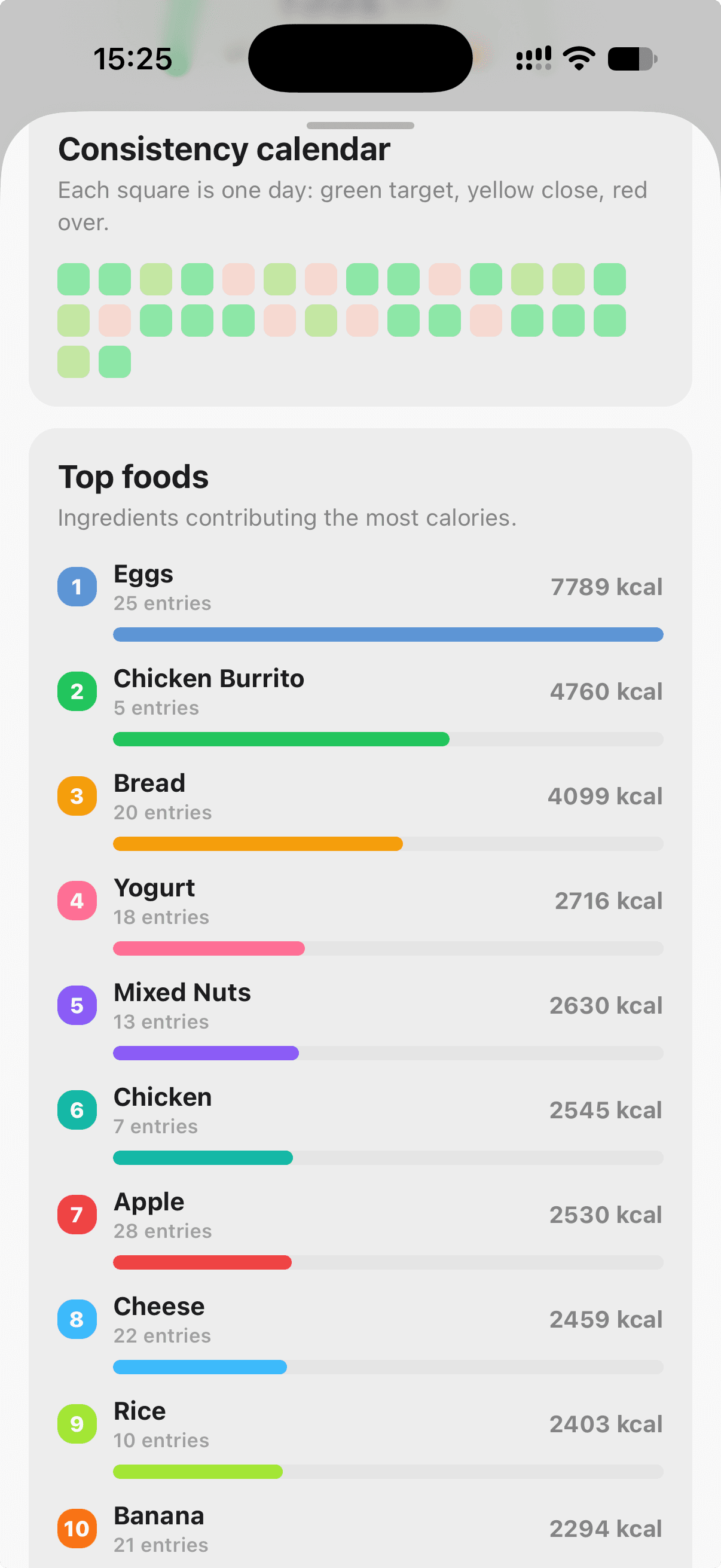
Check the calendar for gaps before interpreting a trend. The Top foods list reflects what was recorded, so missing meals and inaccurate portions can change the ranking.
What should you review once a week?
- Check for missing days or meals. An incomplete diary cannot describe everything you ate.
- Correct a big portion error. A wrong serving can matter more than a small rounding difference.
- Choose one pattern to investigate. For example, compare the logged sources of fiber or the meals where you often leave out a drink.
- Make one small adjustment. Use the next week to see whether it fits your life.
Food Focus also shows macro balance, fiber, added sugar, saturated fat, and meal split across a selected time window. The nutrition-numbers guide explains those charts and what they cannot tell you. The CDC notes that a food and beverage diary can help people notice trends; your own health needs still require individual context.
Questions about consistent food logging
Do I have to log every meal to keep a streak?
No. The Food Focus streak counts consecutive calendar days with at least one saved meal. A single logged meal can extend it, but an incomplete day should not be treated as a complete food diary.
What happens if I miss a day of food logging?
Start again with the next meal. A streak may reset after a missed day, but an honest gap is more useful than an invented log. Food Focus keeps yesterday's streak visible until today ends if you have not logged yet today.
Do green calendar squares mean I ate healthy food?
No. In the current Food Focus chart, green means a logged day's estimated calories were at or below that day's target. The color does not judge food quality, nutrient adequacy, or whether the log was complete.
How often should I review my food diary?
A brief weekly look can help you spot missing logs, recurring foods, and large portion errors. Use any pattern as a question to investigate, not a diagnosis or an automatic reason to change your calorie target.
Make the next log easy
Start with the next meal.
Food Focus keeps your meals and progress together. Review the estimate, save what you actually ate, and use longer views for questions you can act on.
Sources and further reading
These sources support the general explanation above. They do not endorse Food Focus, and research methods do not automatically establish the accuracy of any specific consumer app.
- Health Tips for Adults (opens in a new tab)National Institute of Diabetes and Digestive and Kidney Diseases
Public-health guidance on using a food and beverage diary to notice eating patterns.
- Tips for Keeping Weight Off (opens in a new tab)Centers for Disease Control and Prevention
Explains how food and activity records can help people notice trends; it does not prescribe an app streak.
- Food Focus nutrition sources, methodology and limitations (opens in a new tab)Food Focus
Product-specific explanation of estimated nutrition values and their limits.